
Menu
X
- No products in the list

Key Specifications
Connection Type
Frequency Max
Connector 1
Connector 2
Body Style
VSWR Max
Insertion Loss
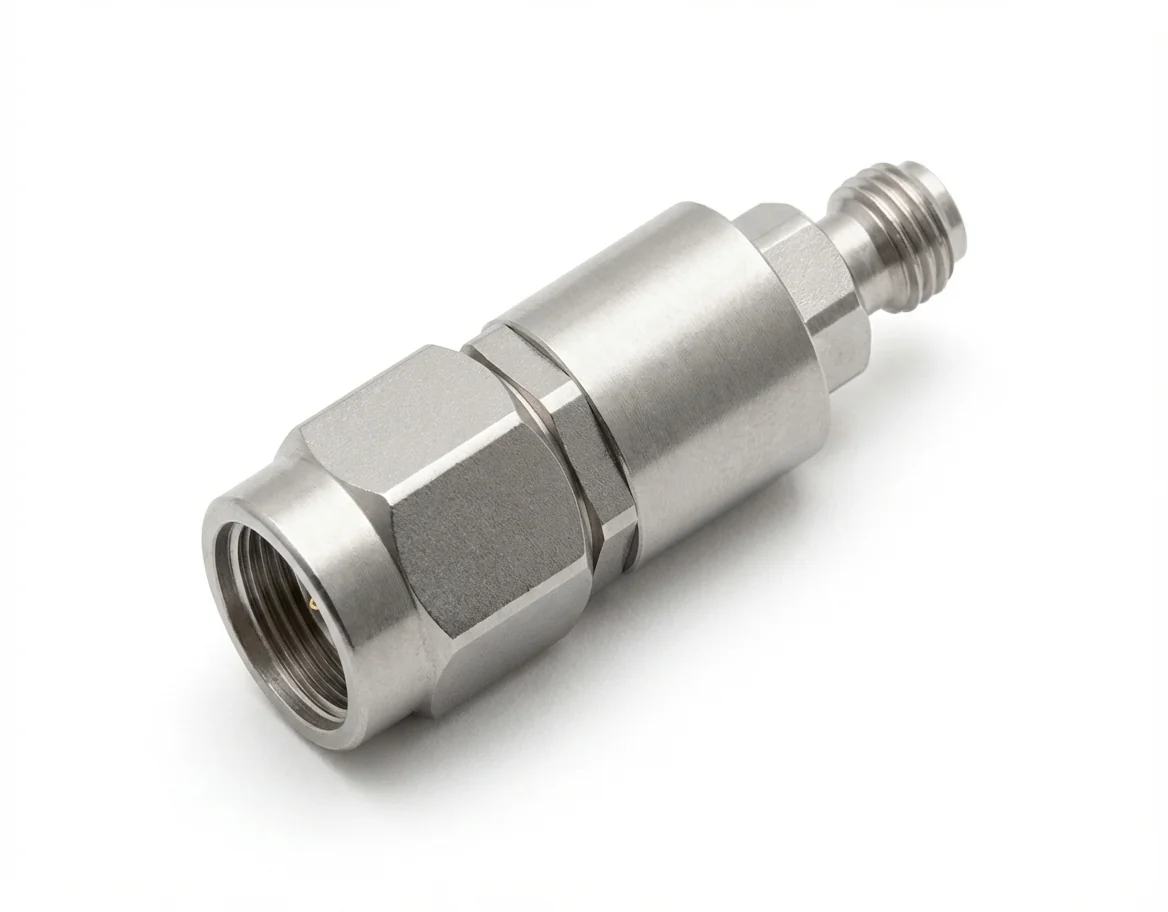
The 2.92mm Male to 1.0mm Female RF Adapter – 2.92/1.0-JK1, also referred to as 1.0mm Female to 2.92mm Male RF Adapter – 1.0/2.92-KJ1, is a high-frequency coaxial adapter engineered for secure, low-loss interconnection between 2.92mm male and 1.0mm female interfaces. This straight adapter enables reliable signal transitions between K-type connectors and ultra-precise 1.0mm measurement-grade interfaces.
Designed for operation up to 40 GHz with a controlled 50-ohm impedance, the 2.92mm Male to 1.0mm Female RF Adapter supports interconnection between high-frequency measurement equipment and advanced modules in applications such as VNA calibration and high-frequency test fixtures, unmanned aircraft RF systems, and 5G module interfaces.
With VSWR ≤1.15 and insertion loss ≤0.5 dB, this adapter delivers excellent electrical performance, ensuring signal stability and minimal reflection across its full bandwidth. The 2.92mm Male to 1.0mm Female RF Adapter is especially useful for engineers needing high precision and low signal degradation in mmWave measurements or tightly integrated communication platforms.
Constructed from passivated stainless steel with gold-plated beryllium copper contacts, this K between-series coaxial adapter offers superior mechanical durability and long-term electrical reliability, even under repeated mating cycles and variable environmental conditions. The adapter operates across a wide temperature range of -55°C to +165°C, making it a dependable choice for both lab and field environments.
RoHS and REACH compliant, this high-frequency Kl adapter combines performance, compatibility, and mechanical resilience for demanding RF testing and system integration. Custom versions of the 2.92mm Male to 1.0mm Female RF Adapter can be provided upon request to meet the specific mechanical or electrical requirements of aerospace, defense, telecom, and advanced test environments.