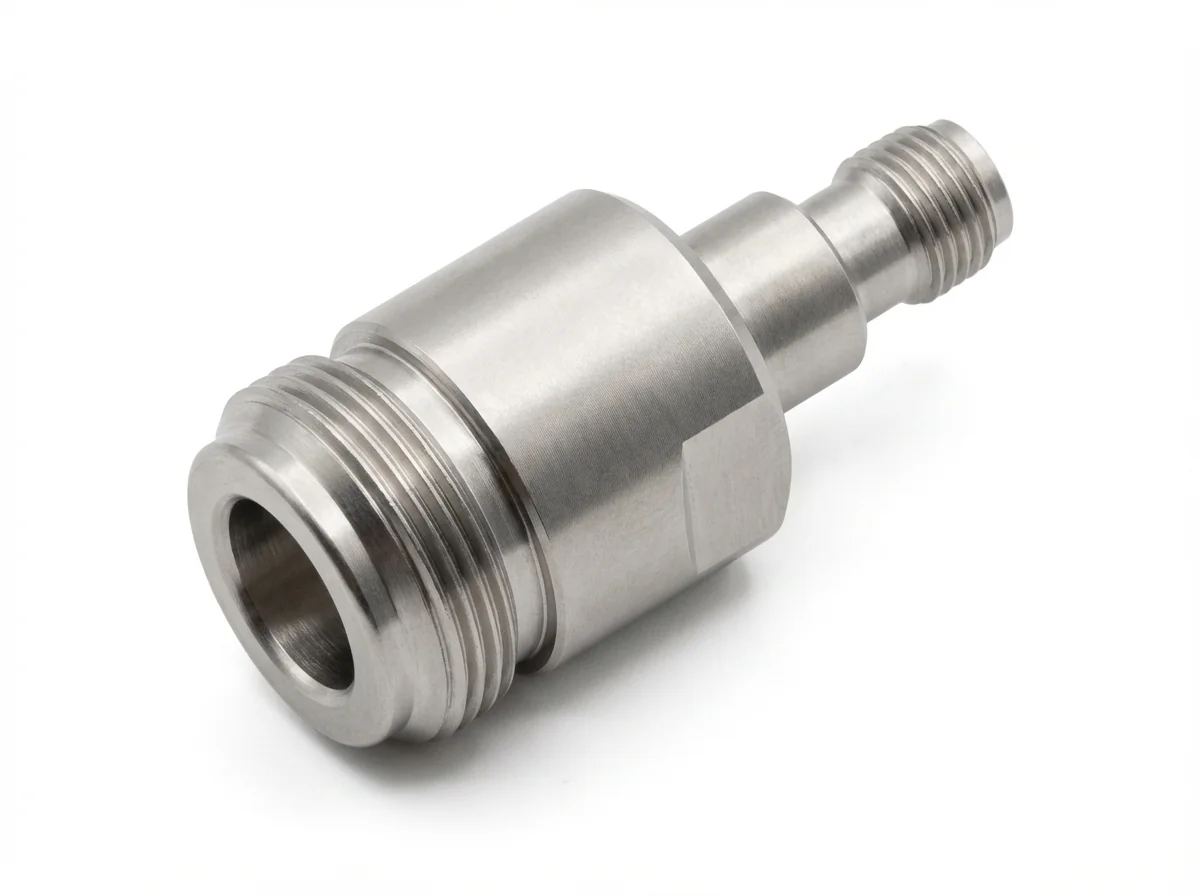
The N Female to 2.92mm Female RF Adapter – N/2.92-KK1, also referred to as 2.92mm Female to N Female RF Adapter – 2.92/N-KK1, is a high-frequency coaxial adapter engineered for secure, low-loss connectivity between N-type female and 2.92mm female interfaces. This straight adapter ensures compatibility between rugged N-type systems and precision-grade 2.92mm modules operating up to 26.5 GHz.
With its broadband performance and 50-ohm impedance, the N Female to 2.92mm Female RF Adapter is ideal for integrating legacy RF infrastructure with high-frequency test and communication equipment. This N female RF adapter finds wide application in component performance evaluation setups, industrial RF environments, and millimeter wave radio systems that require robust connectivity with minimal signal degradation.
This N-type between-series adapter delivers excellent electrical performance, with VSWR ≤1.15 and insertion loss ≤0.25 dB, ensuring reliable signal transmission in demanding RF conditions. The N Female to 2.92mm Female RF Adapter is particularly effective in scenarios requiring precise interfacing between rugged outdoor systems and advanced lab-grade instrumentation.
Constructed from passivated stainless steel and fitted with gold-plated beryllium copper contacts, the N Female to 2.92mm Female RF Adapter is built for mechanical resilience and stable electrical performance. This N straight adapter supports a wide temperature range from -55°C to +165°C, making it suitable for both field deployments and controlled testing environments.
Fully compliant with RoHS and REACH directives, the N Female to 2.92mm Female RF Adapter offers a high-performance transition between connector standards. Custom configurations of this adapter are available upon request to meet specific mechanical and electrical integration needs across defense, aerospace, telecom, and RF testing sectors.