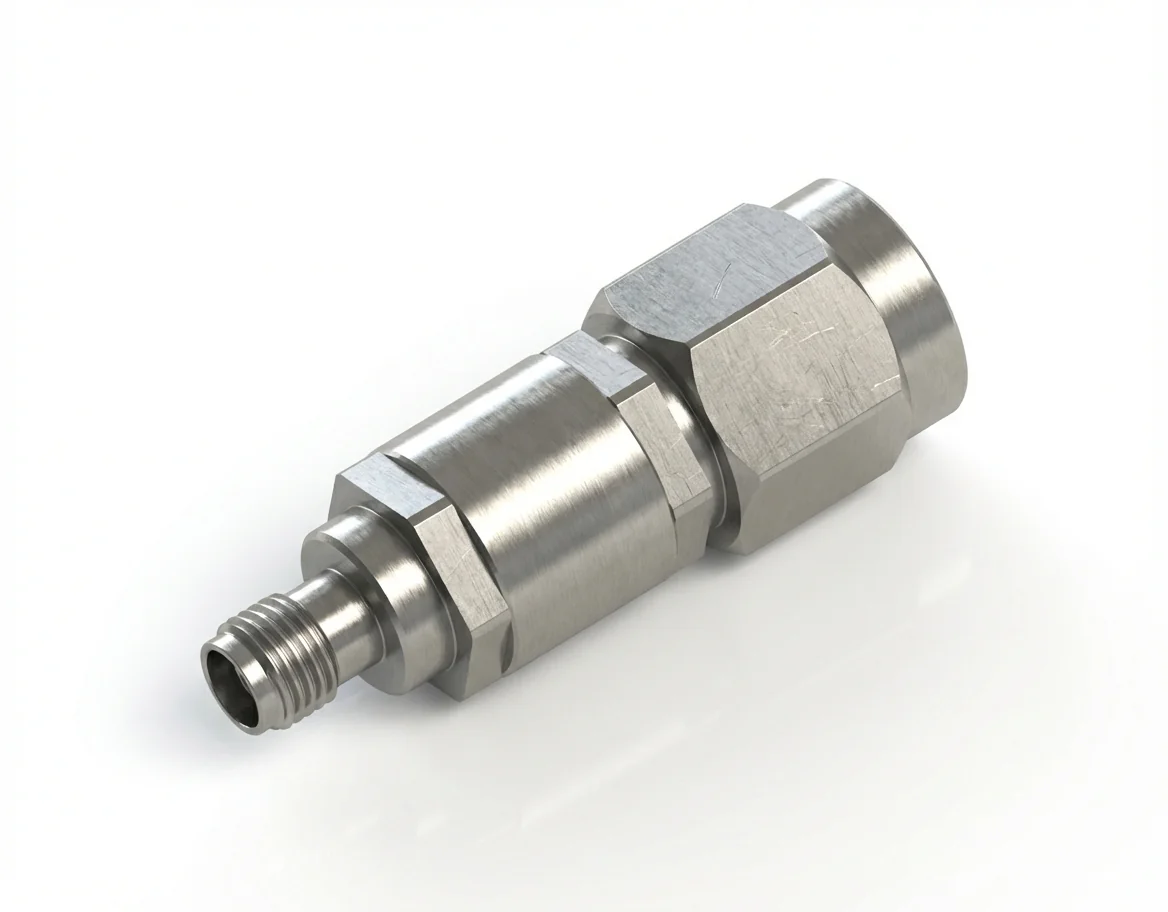
The SMA Female to TNCA Male RF Adapter – SMA/TNCA-KJ1, also referred to as TNCA Male to SMA Female RF Adapter – TNCA/SMA-JK1, is a high-performance coaxial adapter engineered for precision interconnection between SMA female and TNCA male interfaces. This straight adapter provides seamless integration between compact SMA-based test equipment and the rugged TNCA interface commonly used in field and defense-grade RF systems.
The SMA Female to TNCA Male RF Adapter offers a low VSWR of ≤1.15 and an insertion loss of ≤0.25 dB, ensuring minimal signal degradation across its frequency range. The SMA to TNCA between-series adapter provides a reliable solution for engineers and technicians requiring durable, low-reflection connections in RF communication and measurement systems.
Made with a corrosion-resistant passivated stainless steel housing and gold-plated beryllium copper contacts, the SMA Female to TNCA Male RF Adapter guarantees mechanical longevity and stable electrical performance. This SMA Rf adapter operates reliably across a wide temperature range of -55°C to +165°C, making it well-suited for demanding indoor and outdoor RF applications.
RoHS and REACH compliant, the SMA Female to TNCA Male RF Adapter is an essential component in high-frequency communication, radar testing, and military-grade RF setups. Custom configurations are available on request to accommodate specific technical and mechanical integration needs.