
Menu
X
- No products in the list

Key Specifications
Connection Type
Frequency Max
Connector 1
Connector 2
Body Style
VSWR Max
Insertion Loss
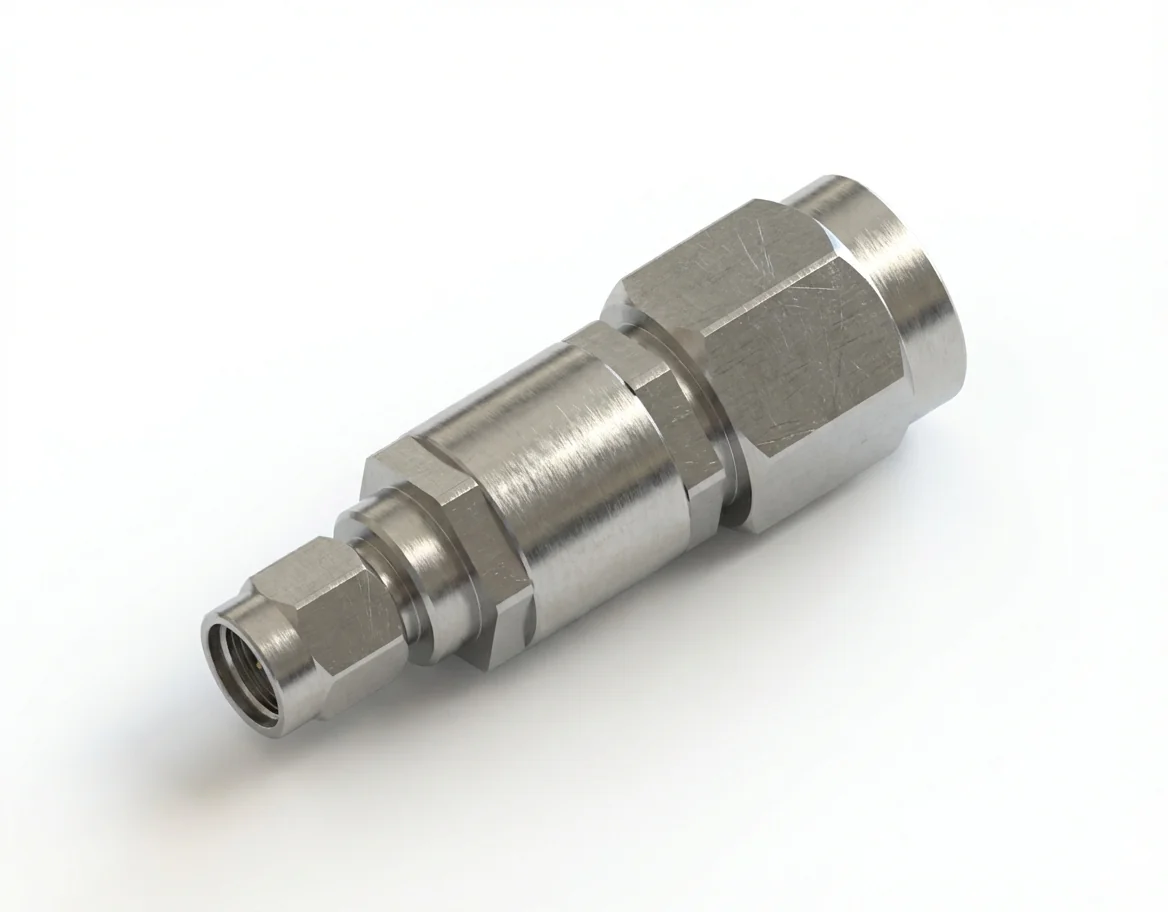
The SMA Male to TNCA Male RF Adapter – SMA/TNCA-JJ1, also referred to as TNCA Male to SMA Male RF Adapter – TNCA/SMA-JJ1, is a high-performance coaxial adapter engineered for secure and low-loss connections between SMA male and TNCA male interfaces. This straight adapter enables direct interconnection between precision-grade SMA systems and robust TNCA connectors used in military and aerospace applications.
Designed for operation up to 18 GHz with a 50-ohm impedance, the SMA Male to TNCA Male RF Adapter is ideally suited for integrating test instruments with field-deployable RF networks. Its versatility makes this SMA between-series adapter a reliable component in radar and electronic warfare systems, RF testing environments, and satellite communication applications.
The SMA Male to TNCA Male RF Adapter delivers superior RF performance with VSWR ≤1.15 and insertion loss ≤0.25 dB, ensuring signal fidelity across its full frequency range. The SMA to TNCA coaxial adapter is an excellent solution for engineers requiring stable connectivity between standard lab connectors and ruggedized field-grade systems.
Built with a passivated stainless steel body and gold-plated beryllium copper contacts, the SMA Male to TNCA Male RF Adapter ensures mechanical resilience and consistent electrical conductivity under demanding conditions. This SMA straight adapter supports operating temperatures from -55°C to +165°C, suitable for both lab and outdoor deployment.
RoHS and REACH compliant, the SMA Male to TNCA Male RF Adapter offers an ideal combination of durability, precision, and regulatory compliance. Custom variants of this SMA adapter are available upon request to accommodate specific mechanical configurations or application requirements in defense, telecom, and aerospace industries.