›
›
›
External Interfaces for 5G Radio Units
External Interfaces for 5G Radio Units
A remote radio unit spends its life outdoors on a tower or a rooftop, and its external RF ports take the weather with it. These are the sealed, low-PIM interfaces that carry the signal between the radio and the antenna — specified to hold their return loss through a decade of wind loading, rain and thermal cycling.
What an External Radio Port Has to Survive
Five things decide whether an outdoor RF port is still in specification five years after it was installed.
Typical Interface Requirements
Exact figures depend on the band plan and the operator specification. These are the conditions external radio-unit ports are normally held to.
| Parameter | Typical Requirement | Relevant Series | Note |
|---|
| Ingress protection | IP67 mated | N-Type, 4.3-10 | Sealed at the interface, not the panel |
| PIM (2 × 43 dBm) | ≤ -160 dBc | Low-PIM N-Type | Plating and contact pressure dominate |
| VSWR | ≤ 1.15 to 6 GHz | N-Type, SMA | Per series datasheet |
| Operating temperature | -40 °C to +85 °C | All outdoor series | Wider ranges available |
| Coupling torque | Per IEC 61169-16 | N-Type | Under-torque is the usual PIM cause |
| Salt spray | MIL-STD-202 Method 101 | Passivated bodies | Coastal and marine sites |
What We Supply for Radio-Unit Builds
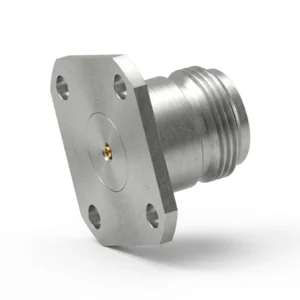
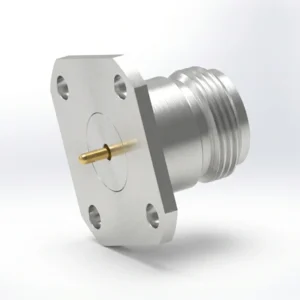
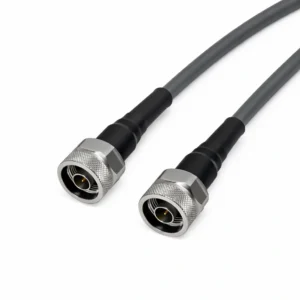
Interfaces for Radio-Unit Ports
Common starting points for external radio-unit interconnect. Tell us the band, the power and the enclosure and we will quote the configuration.
Specifying an Outdoor RF Port?
Send us the band plan, the power level and the enclosure drawing, and our engineers will come back with an interface proposal.