›
›
›
Geosynchronous Satellite Interfaces
Geosynchronous Satellite Interfaces
A geostationary satellite is built once and expected to work for fifteen years, 35,786 kilometres away, with no possibility of repair. Every RF interface in the transponder chain is chosen on that basis: for stability over a decade and a half, not for performance on day one.
Designing for Fifteen Years On Orbit
What changes when the mission is measured in decades rather than months.
Typical GEO Interface Requirements
Programme specifications govern. These are representative conditions for a GEO transponder chain.
| Parameter | Typical Requirement | Relevant Series | Note |
|---|
| Ku-band | 10.7–14.5 GHz | SMA, 2.92mm | Broadcast and data payloads |
| Ka-band | 17.7–30 GHz | 2.92mm, 2.4mm | High-throughput payloads |
| Q / V-band | 33–50 GHz | 2.4mm, 1.85mm | Feeder links |
| Outgassing | TML ≤ 1.0 %, CVCM ≤ 0.1 % | ASTM E595 screened | Condensation on cold surfaces |
| Phase stability | ±3 ppm/°C typical | Phase-stable series | Across the eclipse cycle |
| Design life | 15 years on orbit | Space-qualified series | No maintenance possible |
What We Supply for GEO Payloads
Interfaces for Transponder Chains
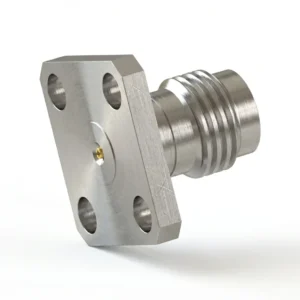
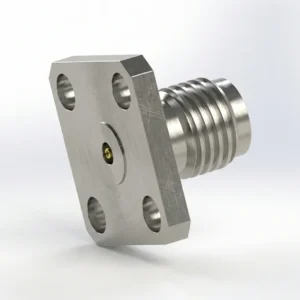
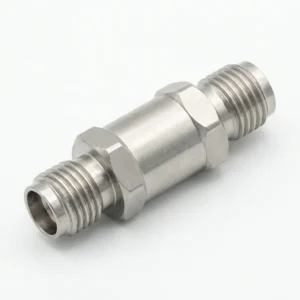
Typical starting points for GEO payload interconnect. Send us the chain and the band and we will propose the configuration.
Specifying a Transponder Chain?
Send us the band plan, the power levels and the thermal environment, and our engineers will propose the interconnect.