›
›
›
Thermal & Stress Simulation Testing
Thermal & Stress Simulation Testing
Environmental testing asks a component to prove it still works after the world has finished with it. Temperature cycling, vibration, humidity and vacuum are applied in sequence or together — and the cabling that carries the measurement into the chamber has to survive the same conditions without becoming the thing that failed.
Measuring Inside a Chamber
Five constraints on interconnect that has to work inside the environment being simulated.
Typical Chamber Requirements
Test standards and programme specifications govern. These are representative.
| Parameter | Typical Requirement | Relevant Series | Note |
|---|
| Temperature cycling | -65 °C to +165 °C | High-temperature series | In-chamber cabling |
| Vacuum | To 1E-6 Torr | Low-outgassing series | TVAC campaigns |
| Random vibration | 20 g RMS | Ruggedised assemblies | MIL-STD-202 Method 214 |
| Phase stability | Characterised vs. temperature | Phase-stable series | So it can be subtracted |
| Feedthrough | Sealed bulkhead | Bulkhead adapters | Boundary integrity |
| Cycle endurance | Full campaign length | Qualified assemblies | No mid-campaign change |
What We Supply for Environmental Test
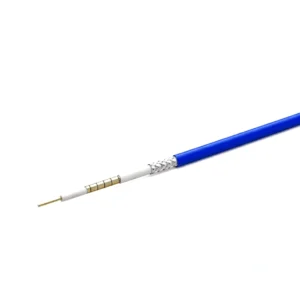
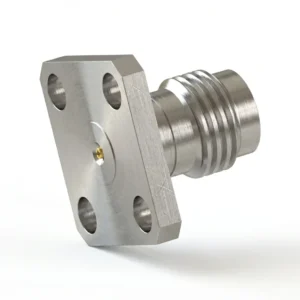
Interfaces for Environmental Chambers
Typical starting points for chamber work. Send us the profile and the geometry and we will quote the set.
Running a Qualification Campaign?
Send us the profile, the chamber geometry and the device interface, and our engineers will propose the interconnect.