Mechanc RF & Microwave Components



- Products
- Markets
- Resources
- About US
- Contact us

Mechanc · Coaxial Cables
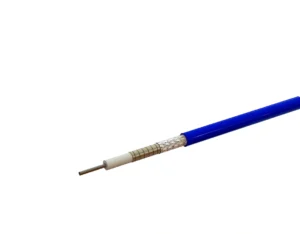
18 GHz Ultra-Low-Loss Precision Test RF Coaxial Cable – CFS740T
Part No.
CFS740T
In Stock
Lead time: 3–5 days (standard) · Custom: on request
Electrical & Mechanical Specifications
| Part Number | CFS740T |
|---|---|
| Loss at Max. Frequency | 0.725 |
| Power at Max. Frequency | 0.402 kW |
| Outer Diameter | 7.60 |
| Jacket Diameter | 7.60 |
| Min. Bend Radius (Static) | 38.00 |
| Velocity of Propagation | 83% |
| Flex Type | Flexible |
Documents & Downloads
Datasheet — CFS740T
PDF · 167 KB
Product Description
Ultra-Low-Loss 18 GHz Precision Cable for High-Power Test Systems
The electrical and mechanical architecture of the CFS740T RF coaxial cable supports RF calibration benches at frequencies up to 18 GHz. Within the CFS740T raw coaxial cable configuration, the CFS family is intended for precision test paths where attenuation, delay and bend management directly influence measurement repeatability. Quantitative comparison of the CFS740T coaxial cable with other Ultra-Low-Loss CFS Precision Test Cables models should be based on the endpoint loss, power, conductor, and mechanical data below.
Fixture Layout Around a Low-Loss Test Lead
Mechanical integration is governed by a 7.60 mm cable diameter, a 38.00 mm minimum static bend radius and 76.00 mm minimum dynamic bend radius, and a temperature range of -55 to +165 °C. For the CFS740T raw coaxial cable, the FEP jacket must be considered in environmental, material-compatibility, and installation assessments. The substantial 7.60 mm envelope of the CFS740T RF cable must be incorporated early in the mechanical layout and connector-transition design. Compliance with these constraints helps protect impedance continuity and repeatability at the cable-to-connector transition associated with the CFS740T RF coaxial cable.
Attenuation and Power at Full Bandwidth
At full rated bandwidth, the cable exhibits a specified attenuation of 0.725 dB/m and supports 0.402 kW of RF power. The conductor system uses silver plated copper at 2.10 mm diameter and provides a specified velocity of propagation of 83%. For the CFS740T RF cable, the 83% propagation value provides the basis for estimating electrical delay and timing skew over the required assembly length. Together, these values support link-loss, electrical-delay, and power-margin calculations for the CFS740T RF coaxial cable at the intended operating frequency.
Precision Systems Where Attenuation Must Stay Low
Its defined operating envelope supports technical assessment for production verification and repeatable microwave measurements without extrapolating from family-level data. For the CFS740T coaxial cable, this documented specification set enables disciplined comparison against alternative cable diameters and performance classes. When alternatives to the CFS740T raw coaxial cable are required, additional construction and performance options are available in the Precision Test Coaxial Cables portfolio.
Mechanc Shanghai Information Technology Co., Ltd. documents the CFS740T RF coaxial cable with product-specific parameters so that RF engineers can evaluate the interconnect against system bandwidth, loss budget, power, thermal, and packaging requirements. Within the product portfolio, this configuration is designated as the CFS740T raw coax.
Browse Related Categories
Related Products
Coaxial Cables
CFS1000
10 GHz Ultra-Low-Loss Precision Test RF Coaxial Cable with FEP Jacket – CFS1000